
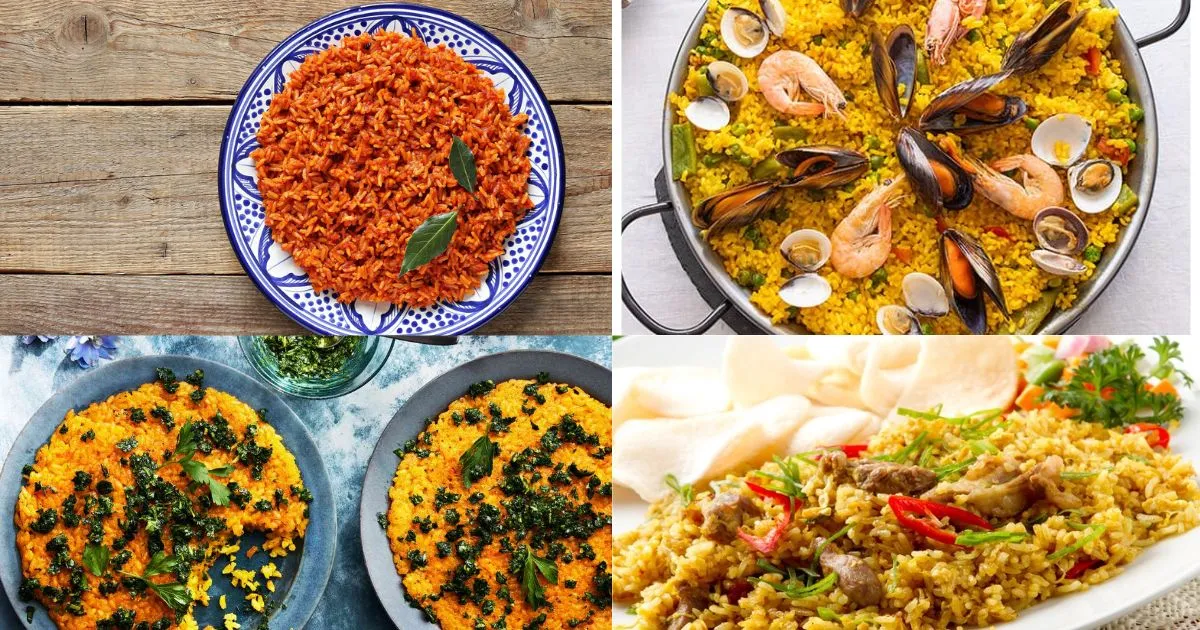
Traditional Rice Dishes Around The World
In India, spicy biryanis and Japan’s elegant sushi and rice dishes tell stories of history, geography, and local lifestyles.
Rice is more than food around the world.
For many cultures, it is identity, celebration, and heritage.
In this guide, we explore some of the world’s most popular rice dishes, their origins, cultural significance, and why they are loved by travelers and foodies alike.
Africa Rice Traditions
Jollof Rice, 2.5 kg
Jollof rice is a celebratory West African staple, a colorful, spicy dish of tomatoes, spices, and rice. It likely developed in the Senegambian area and spread widely through trade and cultural interaction.
Why it’s a bit different:
- Celebration and community symbol
- Famous “Jollof wars” between countries
- Taste: spicy and smoky
Yellow Rice South Africa
Yellow Rice
Turmeric and raisins are common flavorings, and it’s a staple in South African homes, especially for festive meals.
Harissa rice (Tunisian)
Harissa Rice
A North African favorite, spiced up with harissa paste for a bold, spicy kick.
Rice Classics of Europe
Paella, Spain
Paella.
Valencia’s famous one-pan dish of rice and saffron with seafood or meat.
Highlights:
- Cooked in a broad shallow pan
- Strong Mediterranean flavors
- Crispy bottom layer, renowned for its
Risotto, Italy
Risotto
A creamy rice dish cooked slowly with broth, butter, and cheese.
What makes it special:
- Thick texture
- Mushrooms, seafood, variations are endless.
- It is the best of Italian cuisine.
Dolma: Balkans and Central Asia
Stuffed vegetables (dolma)
Vegetables stuffed with rice, such as grape leaves, peppers, or zucchini, are enjoyed in areas.
Middle Eastern Rice Culture: Mansaf (Jordan)
Mansaf (Arabic: مَنصَف)
A classic Jordanian dish of rice, lamb, and fermented yogurt sauce.
Cultural significance:
- Used at celebrations and
- Sign of hospitality
South Asia Rice Excellence: Indian Biryani
Biryanis
Biryani is one of the world’s most famous rice dishes, made by layering aromatic rice with spices and meat or vegetables. It has a basis in Mughal-era cuisine and Iranian influences.
Why it’s legendary:
- Method of cooking rich layers
- Regional varieties like Hyderabadi and Lucknowi are popular worldwide rice icons of East Asia.
Korean Bibimbap
Bibimbap
A colorful rice bowl with vegetables, meat, egg, and chili paste.
Sushi Japan
Sushi
The vinegared rice that accompanies seafood or vegetables reflects Japanese precision and artistry.
Yangzhou Rice, China
Yangzhou Fried Rice
A traditional Chinese dish of eggs, shrimp, vegetables, and rice stir-fried to perfection.
Southeast Asian Rice Favorites
Nasi Lemak Malaysia
Nasi Lemak
Rice cooked in coconut milk, with sambal, peanuts, anchovies, and egg.
Singapore Hainanese Chicken Rice
Chicken Rice (Hainan Style)
Simple, flavorful rice with poached chicken and sauces.
Indonesian ketupat
Ketupat
Palm leaf-wrapped rice cakes are usually eaten during festivals.
Rice Specialties Americas
Pabellón Criollo Venezuela
Criollo Pavilion
A national dish of rice, shredded beef, black beans & plantains.
Juan Peru
Juáné
Rice wrapped in leaves, with chicken and spices. Popular in the Amazon region.
Mexico Arroz Verde
Rice (Green) (20.
Herb-flavored rice with green vegetables.
Hawaii, USA Poke Bowl
Poke Bowl
A modern-day favorite that combines rice with fresh raw fish and toppings.
Why Rice Matters to the World
Rice dishes stand for the following:
- Local ingredients and climate
- Heritage and Cultural Festivals
- History and trade routes
- Bonding between family and community.
Rice is used around the world, in spicy African dishes and delicate Japanese cuisine, making it one of the world’s most versatile foods.
Best Food Travel Experiences of Rice
Here’s where travelers can sample these dishes:
- Street food markets
- Homes and villages of the local
- Food festivals
- Cooking courses
- Cultural tours
One of the best ways to experience authentic culture is food tourism.
Tips for Food Travel
- Try the local versions of each dish.
- Honor the traditions of food.
- Enjoy street food safely.
- Learn the basics of food etiquette.
- Take cooking lessons.
Conclusions
From jollof rice in Africa to biryani in India and sushi in Japan, rice links the world through flavor and tradition.
“Rice is one of the most diverse and meaningful foods in the world, and every culture interprets it differently. Sampling these dishes is more than just taste; it’s about finding stories, history, and culture on a plate.”
FAQs
Q1.What is the most popular rice dish in the world?
Ans.The most globally recognized are biryani, sushi, and paella.
Q2.Importance of rice in many cultures
Ans.Rice is a staple food and a symbol of tradition, identity, and survival.
Q3.Which nation has the greatest rice dishes?
Ans.Many countries have iconic rice dishes; it is all a matter of taste.
Q4.Are rice dishes healthy?
Ans.Yes, especially when combined with vegetables, proteins, and balanced cooking.
Q5.Can vegetarians have rice dishes from around the world?
Ans.Yes, there are many rice dishes that have vegetarian versions.